First Time in a Studio? How to Prepare for Your Shoot Day
Booking your first studio can feel intimidating. There is unfamiliar vocabulary, a clock running on your budget, and the nagging sense that everyone else knows rules you have never been taught. It should not feel that way — a good studio is the easiest place you will ever shoot. The environment is controlled, the power works, the sound is quiet, and there is staff whose whole job is helping your day go well. Here is exactly what to expect and how to show up ready, from the first email to the final idiot-check.
Before you book: talk, then choose
Tell the studio what you are making, your crew size, and your gear plan. A good studio team will steer you to the right room and flag anything you are missing — that conversation is free, and it routinely saves first-timers from booking a stage twice the size they need or half the hours. At Imagicomm Studios, that might mean pointing a two-person interview crew toward Studio C instead of a full sound stage, or suggesting Studio B when a product shoot needs more room to breathe.
Ask what is included — grid, power, furniture, green room — so you do not rent what is already there. First-timers routinely double-book equipment the house provides. Ask about the cancellation policy and whether a deposit holds the date. For the complete question list, see our guide to what to ask before renting a studio.
The week before: confirm and communicate
Confirm your booking window in writing and ask about early load-in — some studios can open the dock fifteen or thirty minutes before your block starts, and that head start is gold. Share your run of show with everyone attending: call time, the shot order, break times, and wrap. A one-page schedule turns a group of individuals into a crew.
If clients are coming, ask the studio about parking and where guests can watch without crowding the set. A client hovering at the camera operator's shoulder slows every setup; a client in a comfortable chair with coffee and a monitor is an ally. Also confirm insurance requirements now — most facilities want a certificate of insurance, and arranging one takes days, not hours.
Load-in and setup: the first hour
Arrive on time — your booking clock usually starts at the scheduled hour, not when you finish unloading. Plan the unload like a small operation: know which door, who carries what, and where cases land. Label your cases, stage them out of walk paths, and ask staff before moving house equipment. Studio furniture, flags, and stands often look free to borrow; some are, some are billable, and a thirty-second question settles it.
Studio etiquette, condensed: no drinks near equipment, no gaffer tape on painted cyc surfaces, ask before rigging anything to the grid, and keep the fire exits clear. None of it is complicated, and staff would far rather answer questions than repair surfaces.
Making your hours count
Shoot your widest, hardest setup first while energy is high. Wide shots expose every flaw in the lighting and set, so solving them early makes each subsequent, tighter setup faster. Batch shots by lighting setup, not by script order — relighting is the slowest thing you will do all day, so do it as few times as possible.
- Assign one person to watch the schedule. On small crews, nobody owns the clock unless someone is named.
- Review takes on a monitor, not the camera's flip-out screen. Focus problems hide on small screens and reveal themselves in the edit.
- Capture room tone — thirty seconds of silence — before wrap. Your editor will thank you.
- Build in a real lunch. Hungry crews slow down more than a 30-minute break ever will.
If your shoot involves interviews, walk in knowing the three-point lighting setup — it is the fastest route from empty stage to professional frame, and a pre-rigged grid makes it a twenty-minute build.
Wrap like a pro
Budget 45 to 60 minutes for wrap; it always takes longer than the optimistic version in your head. Coil cables properly, return house equipment to where you found it, and leave the space the way you found it — studios remember tidy crews when the calendar gets tight, and they remember the other kind too.
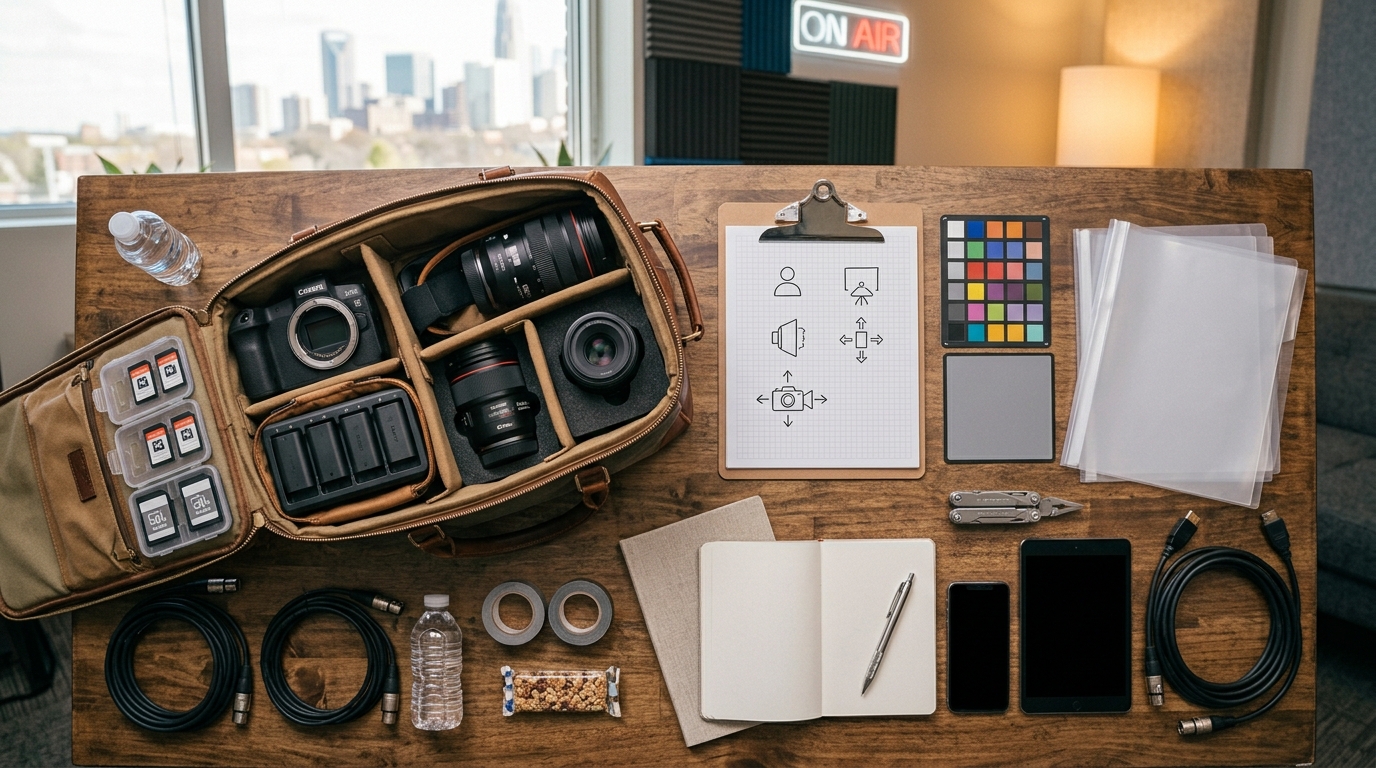
Then do a final idiot-check before you pull out of the lot: chargers in wall outlets, media cards in the camera or the reader, lav mics still clipped to a departed interviewee's jacket. Every experienced producer has a story about the one they left behind; the checklist exists so you will not.
Common first-timer mistakes
- Booking exact hours with no buffer. Add one hour. Unused buffer is cheap; overtime and panic are not.
- Skipping the pre-shoot conversation. The studio team has watched hundreds of shoot days and will hand you their lessons for free.
- Over-inviting. Every extra person on set adds noise, opinions, and pizza costs. Bring the people with jobs.
- No shot list. Winging it feels creative and shoots slow. Even ten bullet points beats improvisation.
Frequently asked questions
How many hours should a first studio shoot book?
For a simple interview or content day, book six hours: one for load-in and lighting, three to four for shooting, one for wrap. It is far better to finish early than to negotiate overtime mid-shoot.
What should I bring to a studio that provides the space and grid?
Your camera and audio kit, media and backups, chargers, gaffer tape, a printed shot list, and water. Confirm with the studio what lighting and grip the house provides before renting anything.
Can studio staff help during my shoot?
Usually yes — ranging from a walkthrough at load-in to bookable crew and engineering support. Ask when you book so help is scheduled, not improvised.
What happens if I run over my booked time?
Most studios bill overtime by the hour if the schedule allows, but the next booking may not leave room. Flag a possible overrun as early in the day as you can — a heads-up at noon is a conversation, a surprise at wrap is a problem.
Have questions before your first booking with us? Ask away — we love first-timers, and twenty minutes of conversation now makes your shoot day dramatically smoother.
Ready to shoot in Charlotte? Check studio availability or book a tour of Imagicomm Studios.