Renting a Podcast Studio in Charlotte: What to Look For
Charlotte has a fast-growing podcast scene, and with it, a growing number of rooms that call themselves podcast studios. Some are genuinely broadcast-ready facilities; others are spare offices with foam squares glued to the wall and a single USB microphone on a desk. The difference will not always show up in the listing photos, but it will absolutely show up in your recordings. Before you book, here is what actually matters — and the specific questions that separate a great recording room from an expensive disappointment.
1. Room sound beats gear
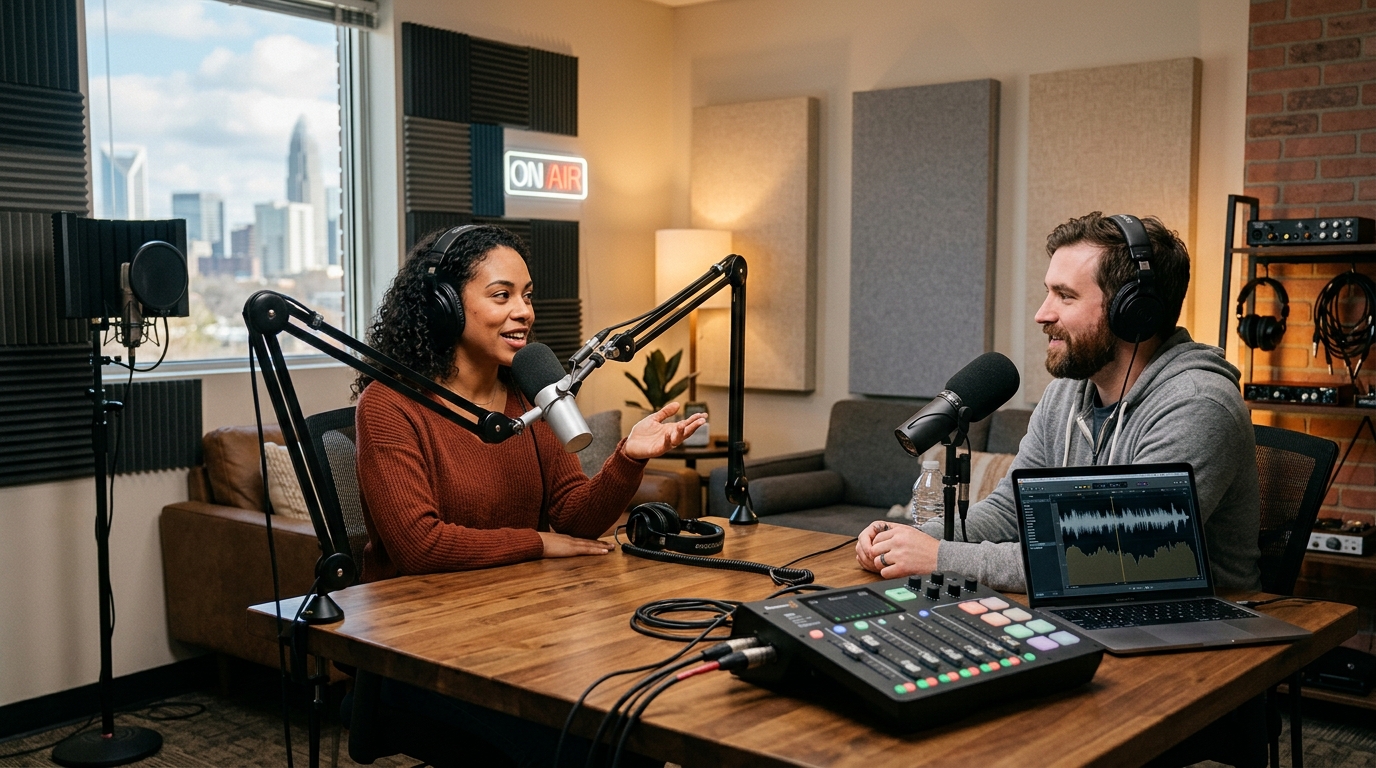
A $1,000 microphone in an untreated room still sounds like an untreated room. Reflections off hard walls, low-ceiling boom, and HVAC rumble cannot be fully fixed in post, no matter what a plugin promises. Listen for real acoustic treatment — thick absorption panels placed deliberately, bass control in the corners, a quiet air system — not decorative foam squares, which do almost nothing below the frequencies of human speech.
The single best test: ask to hear a raw sample recorded in the room, with no processing. Clap once and listen for flutter echo. If the studio hesitates to share raw audio, that tells you something too. If you want to understand why treatment matters more than isolation for most shows, our article on sound treatment versus soundproofing breaks down the difference.
2. Multitrack recording is non-negotiable
Every voice should land on its own track. Multitrack recording lets your editor fix crosstalk, level differences, and the guest who leans away from the mic mid-story. It also makes advanced cleanup possible: removing one person's cough without touching the host's sentence, tightening a rambling answer, or rescuing a great take where two people talked over each other.
If the studio only delivers a single stereo mix, keep looking. A stereo mixdown locks in every mistake at the moment of recording. Ask specifically: how many simultaneous tracks, what format the files arrive in, and how you receive them after the session. Same-day file delivery via a download link should be standard in 2026.
3. Video capability is now the baseline
Podcasting in 2026 is a video-first medium. Clips drive discovery on YouTube, TikTok, and Instagram, and full video episodes on YouTube routinely out-perform audio-only feeds for new shows. A studio that cannot shoot video is renting you half a product.
Look for multi-angle 4K cameras — at minimum a wide shot and a single on each speaker — and lighting that flatters guests without a full relight between setups. Camera angles matter more than camera brands: a locked wide plus clean singles gives your editor everything needed for both full episodes and vertical clips. If you are planning a video-first show, our multi-camera podcast setup guide goes deeper on angle selection and switching.
4. Engineering support, or the freedom to skip it
The best studios let you choose: walk in and press record yourself, or have an engineer run the session so you can focus entirely on the conversation. First-time hosts should always take the engineer. Levels, mic technique, file management, and camera framing are each simple individually, but juggling all of them while trying to be a good interviewer is how first episodes end up unusable.
At Imagicomm Studios, our team can handle setup and engineering so you can walk in, sit down, and record. Once you have a few sessions behind you, self-serve becomes a genuinely comfortable option — but do not make episode one your training ground.
5. Capacity and format flexibility
Think about where your show is going, not just where it starts. A solo commentary show needs one great mic position; a roundtable needs four to six. Our podcast studio seats up to six guests with professional dynamic microphones on every position, which covers everything from solo narration to a full panel without changing rooms. Dynamic mics are the right call for shared spaces — they reject room noise and off-axis chatter far better than the condenser mics you see in music studios.
6. Location and logistics
Free parking, easy load-in for any gear you bring, and a comfortable spot for guests to wait all make recording days smoother — and they matter more than hosts expect. Guests arrive nervous. A confusing parking situation or a cramped hallway wait raises their stress before the red light even comes on, and stressed guests give flat interviews.
Imagicomm Studios sits at 9700 Southern Pine Blvd in south Charlotte, minutes from I-77 and I-485, with free on-site parking and a green room where guests can settle in with coffee before the session. Small things, but they show up in the energy of the recording.
How to compare pricing fairly
Podcast studio rates in Charlotte generally run from around $60 per hour for well-equipped rooms to considerably more for facilities bundling an engineer, editing, and clip production. Compare quotes on the same basis: does the rate include an engineer, how many tracks and camera angles, and what do you actually walk out with? A cheaper room that delivers one stereo file and no video is not cheaper once you price the gear and editing time needed to match a turnkey session.
Frequently asked questions
How long should I book for one podcast episode?
Book two hours for a one-hour episode. That covers settling in, a level check, the conversation itself, and a buffer for the tangent that turns out to be the best part of the show. Recording back-to-back episodes in a single longer block is the most cost-efficient approach.
Do I need to bring any equipment?
To a properly equipped studio, no — mics, headphones, cameras, and recording are provided. Bring your notes, water, and any branding elements like mugs or a banner you want in frame.
Can I record a remote guest from the studio?
Yes. A good studio can route a remote caller into the session so the in-room host is captured at full quality while the remote guest lands on a separate track. Ask how the studio handles it before booking; our remote interview guide covers how to make the far end sound good too.
Ready to hear the difference a real room makes? Book a session or come tour the podcast studio in person — first-time hosts welcome.
Ready to shoot in Charlotte? Check studio availability or book a tour of Imagicomm Studios.