Sound Treatment vs. Soundproofing: What Your Recording Actually Needs
Every week someone tells us they "soundproofed" a home office with foam panels from the internet — and every week they discover their recordings still capture the neighbor's leaf blower. The confusion is understandable: soundproofing and acoustic treatment sound like synonyms. They are not. They solve different problems with different physics, and knowing which problem you have will save you money and frustration. This guide explains both, shows you how to diagnose your own room, and lays out honestly when to invest in fixes and when to simply rent a room where the work is already done.
Soundproofing: keeping sound out (and in)
Soundproofing is isolation — preventing sound from crossing a boundary. Traffic, HVAC rumble, footsteps upstairs, thunderstorms: blocking them requires mass, decoupling, and sealing, which in practice means dense materials, air gaps, floated floors, double-stud walls, and heavy doors with proper seals. It is construction, not decoration.
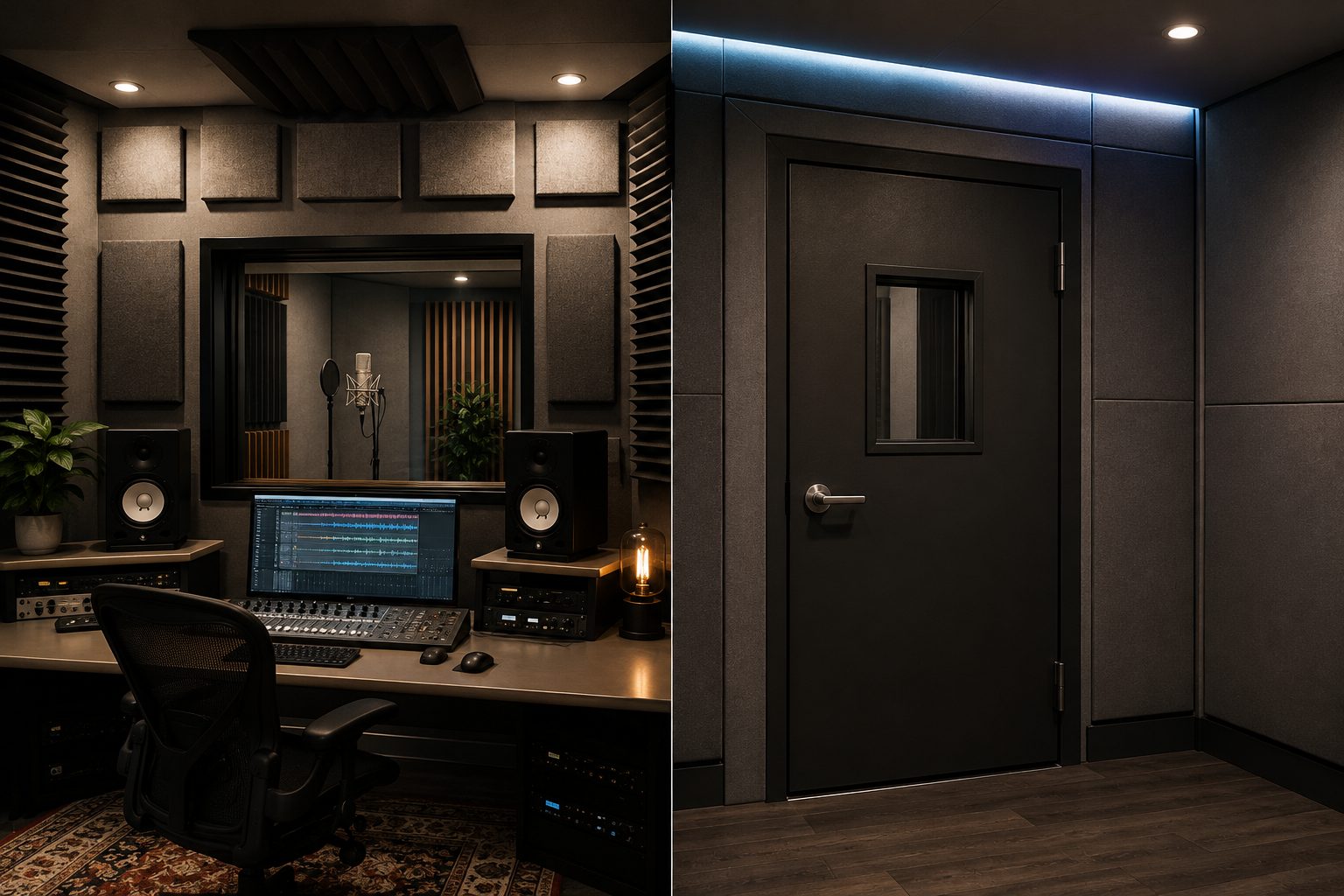
This is why foam panels cannot soundproof anything: a two-inch piece of open-cell foam has almost no mass. Sound waves that traveled through a brick wall are not impressed by it. Genuine isolation is expensive and physical, which is exactly why purpose-built studios exist — the isolation is in the walls before anyone hangs a single panel. It also works in both directions: the same construction that keeps the highway out keeps your voiceover session from bothering the office next door, which matters more than people expect in shared buildings.
Acoustic treatment: controlling sound inside
Treatment addresses what happens to sound within the room. Hard parallel surfaces bounce sound back and forth, producing echo, comb filtering, and that hollow "recorded in a bathroom" character that no plugin fully removes. Treatment tools include:
- Absorption — panels and bass traps that convert acoustic energy to heat, taming reflections and low-end buildup.
- Diffusion — irregular surfaces that scatter reflections instead of killing them, keeping a room natural rather than dead.
- Placement — treating first-reflection points and corners where bass accumulates matters far more than covering every wall.
An over-treated room sounds anechoic and unnatural; a well-treated one simply sounds clean. The goal is a controlled decay, not silence.
Diagnose your room in two minutes
Two simple tests reveal which problem you have. First, the clap test: stand in the middle of the room and clap once. If you hear a metallic ringing or a fluttery echo trailing the clap, you have a treatment problem. Second, the silence test: sit quietly with a recorder running at your normal recording time, then listen back with headphones turned up. Traffic, HVAC, refrigerator hum, birds — everything you hear is an isolation problem. Most home rooms fail both tests, but they fail the treatment test more audibly, which conveniently is the cheaper one to fix. Repeat both tests at different times of day before spending anything — a room that is quiet at noon can be unusable at rush hour, and that knowledge alone shapes a smarter recording schedule.
Why recordings need both
Picture a perfectly treated room next to a fire station: your voice sounds beautiful between sirens. Now picture a perfectly isolated concrete bunker: no sirens, but every word slaps back off bare walls. Professional results demand isolation and treatment — which is the honest answer to why podcast audio recorded in purpose-built studios sounds different from bedroom recordings, even with identical microphones. Listeners may not know the vocabulary, but they hear the difference instantly, and in a medium where the voice is the entire product, that difference is your brand.
Common mistakes and what they cost
The classic errors, in descending order of money wasted: buying "soundproof" foam expecting isolation; treating the wall behind the microphone while ignoring the reflective wall the mic actually points at; hanging thin panels and skipping the corner bass traps that fix the muddiness people actually complain about; and buying a more expensive microphone to solve what is really a room problem. A better microphone in a bad room is a higher-fidelity recording of a bad room. If you are choosing between a gear upgrade and room improvement, read our podcast audio gear guide — the room usually wins.
What this means for your next recording
If you are building a home setup, spend first on treatment (it is cheaper and fixes the more audible problem), record at quiet hours, and keep expectations realistic about isolation. A sensible sequence: thick absorption panels at first-reflection points, bass traps in the corners, a rug on a hard floor, and a heavy blanket over the largest untreated surface. That gets a diligent DIY room surprisingly far for a modest spend.
If you are producing something where audio quality carries the brand — a podcast, a course, voiceover, an interview series — rent a room where both problems were solved during construction. The math favors renting more often than people assume: real isolation is a construction project measured in tens of thousands of dollars, while a purpose-built room rents by the hour. For anything client-facing or episodic, the rented room wins on quality, consistency, and total cost. Our guide to podcast studio rental in Charlotte breaks down what to look for.
Frequently asked questions
Will moving blankets or heavy curtains soundproof my room?
No — but they are legitimately useful treatment. Dense, heavy fabric absorbs mid and high frequencies well, taming echo and flutter. It will not stop the leaf blower. Use blankets to improve the sound inside the room and manage expectations about what crosses the walls.
Does a "dead" room always sound better?
For spoken word, drier is generally safer because you can add ambience in post but never remove it. Completely dead, however, sounds unnatural and fatiguing. Well-designed speech rooms mix absorption with some diffusion so voices stay present but human.
How is the Imagicomm podcast studio built?
Our podcast studio in Charlotte was treated and isolated for speech recording specifically, and the film stages at Imagicomm Studios are sound-treated and quiet enough for sync-sound dialogue. Ask us about a listening visit — bring your current recordings and hear the difference a real room makes. Most people need about thirty seconds of playback to understand everything this article just explained.
Ready to shoot in Charlotte? Check studio availability or book a tour of Imagicomm Studios.