How to Start a Podcast in Charlotte in 2026: A Step-by-Step Guide
Thinking about launching a show? Charlotte is a great city to do it in — a growing creator scene, a deep bench of potential guests across banking, sports, food, and tech, and professional recording infrastructure that no longer requires a flight to reach. The barrier to entry has never been lower, but the barrier to sticking with it is exactly where it has always been: most podcasts quit before episode ten. Here is the path from idea to published episode, plus the habits that keep shows alive past the point where most of them die.
Step 1: Define the show before the gear
Write one sentence: who the show is for and what they get from every episode. Not a vibe, not a topic area — a listener and a payoff. "Charlotte small-business owners get one actionable marketing idea per episode" is a show. "Two friends talk about stuff" is a hobby, which is fine, but know which one you are building.
Choose a format — solo, co-hosted, or interview — and an episode length you can sustain. Sustainability is the operative word: a tight 25-minute weekly show beats a sprawling 90-minute show that ships whenever life allows. Consistency beats production value in the first year, and it is not close. Then name the show something searchable, sketch your first ten episode topics, and notice whether the list came easily. If you cannot outline ten episodes, the concept needs work before the microphone does.
Step 2: Decide where you will record
You have two options, and neither is wrong.
Build a home setup. A quiet room, a dynamic mic, and a simple interface will get you started around $300. The hidden cost is the learning curve — gain staging, room echo, file management, and the dozens of small technical decisions that stand between you and a clean recording. Budget real time for it, and read our podcast audio gear guide before buying anything.
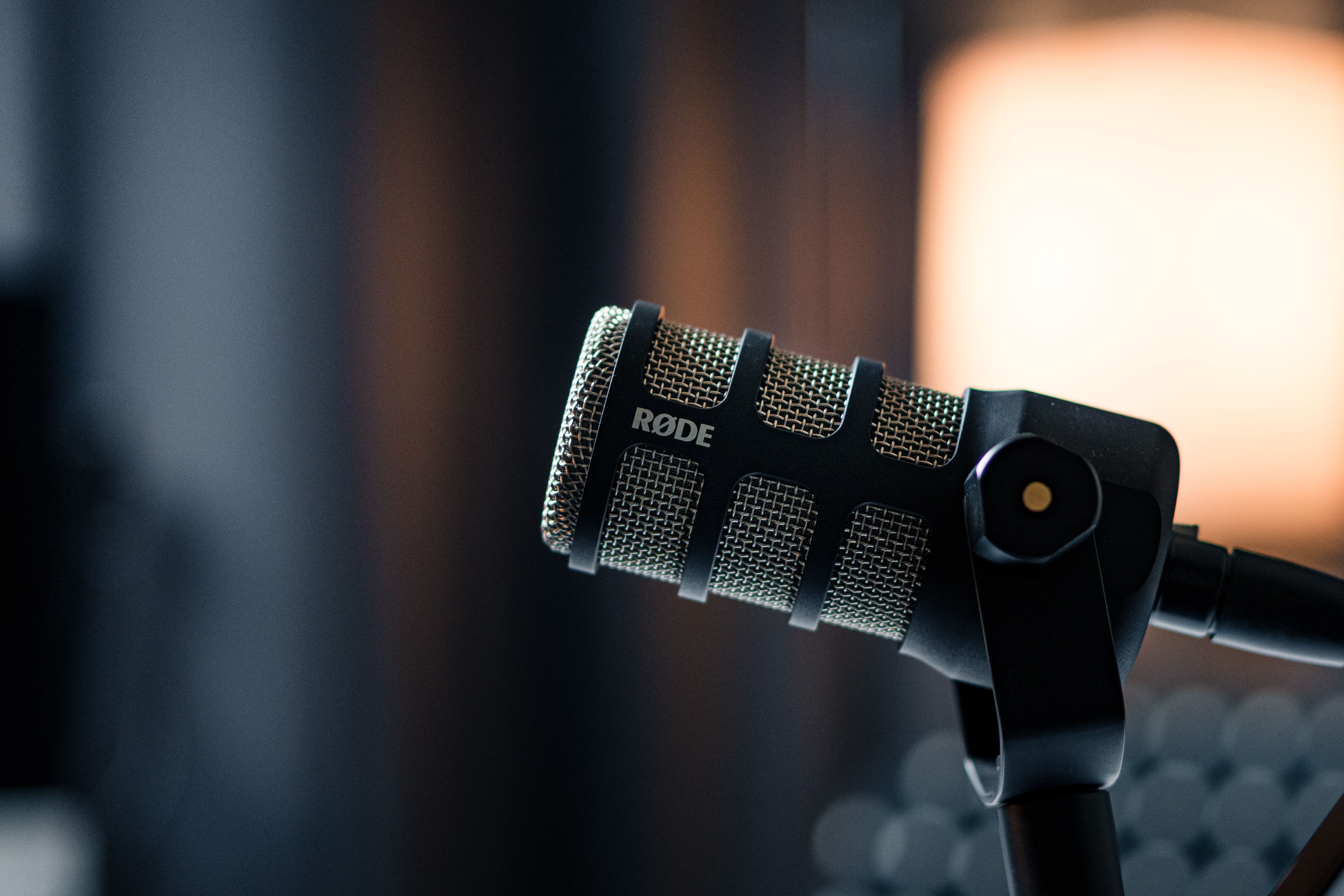
Book a professional studio and skip the learning curve entirely. Multitrack audio, video cameras, and an engineer for roughly the cost of a nice dinner per episode. The podcast studio at Imagicomm Studios runs $60 per hour, seats up to six with professional dynamic microphones, and records multi-angle 4K — walk in, sit down, and record while our team handles the engineering. Many Charlotte shows start in a studio to nail their first impression, then decide from there. Your earliest episodes are your audition with every new listener; sounding professional from episode one is worth more than most hosts realize. Not sure how to evaluate rooms? Our podcast studio rental guide covers what separates great rooms from bad ones.
Step 3: Record smart
Record every voice on its own track — multitrack recording is the single technical decision that most protects your show, because it lets an editor fix levels, crosstalk, and mistakes per person instead of living with a baked-in mix. Do a 30-second test and listen back before every session; the sessions ruined by a dead cable or a muted channel are always the ones where nobody checked.
- Keep mics a fist-width from the mouth and stay consistent — drifting distance is the most common amateur tell.
- Keep water handy for everyone. Dry mouths are audible.
- Pause and restart a flubbed sentence cleanly rather than talking through it; clean edit points save hours.
- Record a little room tone at the end of each session for the editor.
Step 4: Edit and publish
Trim the dead air, cut the tangents that do not serve the listener, and level the audio so no one has to ride their volume knob. Edit for the listener, not your ego — the ruthless cut is almost always the right cut. Budget one to two hours of editing per episode hour when starting out, or hire it out once the show proves itself.
Host the show on a podcast host, which distributes to Spotify, Apple Podcasts, and YouTube automatically. Write episode titles that say what the episode delivers rather than teasing it, and launch with two or three episodes so new listeners can binge. A complete pre-flight list lives in our podcast launch checklist.
Step 5: Grow with video clips
Short vertical clips are the number one discovery engine for new shows. A single hour-long episode yields five to ten clip candidates — the sharpest opinion, the best story, the exchange that made everyone laugh. Posted consistently to TikTok, Instagram Reels, and YouTube Shorts, those clips do the audience-building work that audio feeds cannot do alone.
This is the strongest practical argument for recording with cameras from day one: every episode becomes a week of social content with no extra recording time. Retrofitting video onto an audio-only show later means re-solving lighting, framing, and set — starting video-first means the work is already done.
The habits that keep shows alive past episode ten
Podcasting rewards systems over inspiration. Batch-record two or three episodes per session so a busy week never breaks the feed — studio time makes this efficient, and our batch filming guide shows the workflow. Keep a running bank of episode ideas and guest names. Book guests three weeks out. And set a realistic definition of success for year one: a show that ships every week and improves slightly each month is beating ninety percent of the field.
Frequently asked questions
How much does it cost to start a podcast in Charlotte?
A capable home setup starts around $300. The studio route costs roughly a nice dinner per episode — at Imagicomm Studios, $60 per hour buys multitrack audio, 4K multi-cam, and engineering support with zero equipment purchases.
Do I really need video for a podcast in 2026?
Need, no. Want, almost certainly — video clips are how new shows get discovered, and YouTube is now one of the largest podcast platforms. Audio-only shows grow slower.
How often should I publish?
Weekly is the standard that trains listener habits, but a consistent biweekly show beats an erratic weekly one. Pick the cadence you can hold for a year and protect it by batch recording.
Want the professional route from day one? Book our podcast studio — walk in, press record, walk out with multitrack audio and 4K video, and spend your energy on the conversation instead of the cables.
Ready to shoot in Charlotte? Check studio availability or book a tour of Imagicomm Studios.