How Much Does It Cost to Rent a Film Studio in Charlotte?
If you are budgeting a shoot in Charlotte, studio rental is usually one of the easiest line items to estimate — once you know what drives the price. Unlike location fees, which swing wildly based on the property owner's mood, studio rates in the Charlotte market are published, predictable, and comparable. This guide walks through typical hourly rates, the four factors that move the number, what should be included in any quality rental, and how to build a realistic budget for your shoot day from load-in to wrap.
Typical hourly rates in Charlotte
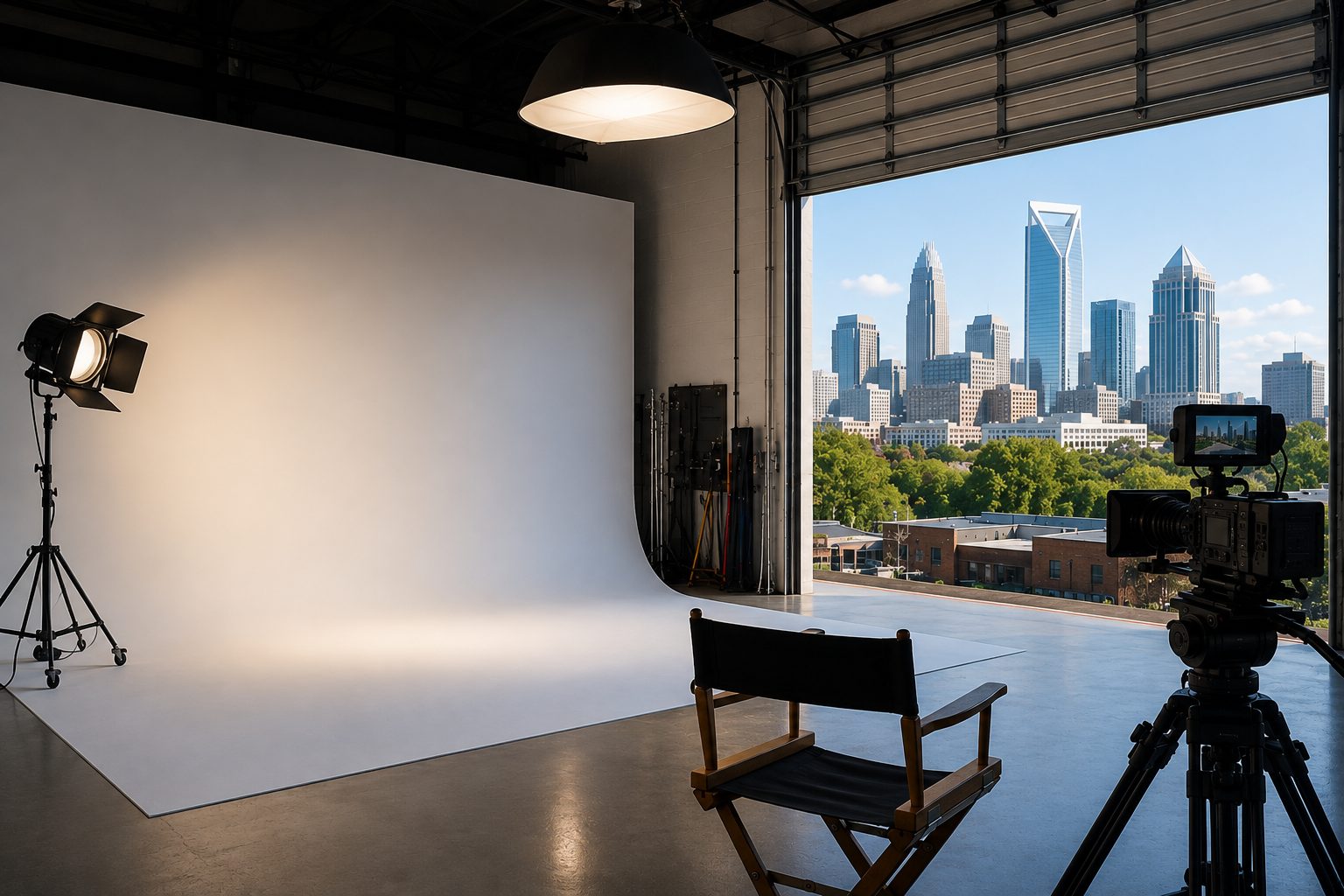
In Charlotte, small insert stages and content rooms generally run $60 to $100 per hour. Mid-size stages suited to interviews and product work land between $100 and $150 per hour. Large sound stages with cyc walls, full lighting grids, and drive-in access typically start around $150 per hour and climb with add-ons. At Imagicomm Studios, our spaces range from $60 per hour for the podcast studio to $150 per hour for Studio A, our largest stage.
Those numbers put Charlotte in a comfortable middle ground nationally. Comparable stages in New York or Los Angeles often cost two to three times as much, and even Atlanta rates spike during busy production seasons. For brands and agencies producing regional or national work, that difference is real money that can move into crew, talent, or post-production.
The four factors that drive cost
Four factors move the number more than anything else, and understanding them helps you compare quotes fairly.
- Stage size. Square footage is the baseline. A compact insert stage for a two-person crew costs a fraction of a stage that can hold a set build, a jib, and a thirty-person crew.
- Infrastructure. A seamless cyclorama wall, a full overhead grid, production-grade power distribution, and honest sound treatment all cost the studio money to build and maintain — and they save you money in rentals and setup time. If you have never worked with a cyc, our explainer on what a cyc wall is and when you need one covers the value it adds.
- Gear and crew add-ons. Lighting packages, camera support, engineering help, and production assistants are usually quoted separately. Add-ons are where two identical stage quotes can end up hundreds of dollars apart.
- Booking length. Many studios, ours included, offer half-day and full-day rates that beat the hourly math. If your plan says six hours, price the half day; it often costs the same and buys you breathing room.
What is usually included — and what to watch for
A quality studio rental should include the stage itself, the house lighting grid, standard power, Wi-Fi, parking, and access to a green room. At Imagicomm Studios, every booking also includes the kitchenette and free on-site parking, because nickel-and-diming crews on basics is a bad way to build relationships.
Watch for facilities that charge separately for things that should be standard: power tie-in fees, restroom access on longer days, mandatory site reps at inflated rates, or cleaning fees applied regardless of how you leave the space. None of these are automatically deal-breakers, but they belong in your comparison math, not as surprises on the invoice. A studio's rate sheet tells you the price; the follow-up questions tell you the real cost. Our guide to questions to ask before renting a studio covers the full list.
How to budget your day honestly
Plan your load-in and wrap time honestly — most crews underestimate both. Load-in for a simple interview setup takes 60 to 90 minutes if you are moving efficiently. A commercial set build can take half a day or more. Wrap almost always takes longer than crews expect because everyone is tired and the truck packs slower than it unloaded.
Here is a realistic framework. A typical interview shoot books 6 hours: an hour of load-in and lighting, three to four hours of interviews, and an hour of wrap. A commercial with set builds often needs 10 to 12 hours or a multi-day hold, with the build day sometimes billed at a reduced rate since you are not shooting. A content batching day for social media fits comfortably in 4 hours on a smaller stage.
Tell the studio what you are making and let them recommend a block. Good studio managers have watched hundreds of shoots run long and short, and their estimate is usually better than your first guess.
A worked example: pricing a corporate interview shoot
Say you are producing three executive interviews with b-roll for a Charlotte company. A mid-size stage at $110 per hour for 6 hours is $660. Add a modest lighting package and you are likely between $800 and $1,000 for the facility side of the day — often less if the half-day rate applies. Compare that with a location shoot at the company's office: no location fee, but you inherit HVAC noise, fluorescent lighting, curious coworkers, and a conference room you must restore by 5 p.m. The studio premium frequently pays for itself in usable footage per hour. For the full trade-off analysis, see our comparison of studio versus location shooting.
Common budgeting mistakes to avoid
- Booking exactly the hours you need. Leave a one-hour buffer. Overtime rates and a stressed final hour cost more than the buffer does.
- Ignoring the day rate. If you need more than five hours, the day rate is almost always the better deal.
- Renting gear the studio already has. Ask what is on the grid and in the house package before you call the rental house.
- Forgetting insurance. Most studios require a certificate of insurance. Arrange it a week ahead, not the morning of.
Frequently asked questions
What is the cheapest way to rent studio space in Charlotte?
Book a compact insert stage on a weekday, bring your own lighting, and batch multiple pieces of content into one session. Small stages in the $60 to $100 per hour range handle interviews, creator content, and product shots without the overhead of a full sound stage.
Do studios charge for load-in and wrap time?
Yes — your booking clock covers every minute you occupy the stage, including setup and teardown. Budget for it explicitly rather than hoping to squeeze it into shooting time.
Are deposits and cancellation fees standard?
Most facilities take a deposit to hold the date and apply a cancellation window, commonly 48 to 72 hours. Ask before you book so a schedule change does not become a budget line.
Ready to price out your shoot? See our spaces and rates or request a custom quote — we will help you pick the right room and the right block of hours for what you are making.
Ready to shoot in Charlotte? Check studio availability or book a tour of Imagicomm Studios.